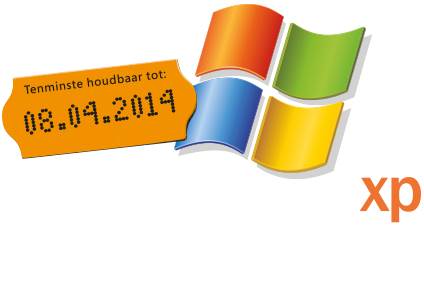
This year, Progress and Microsoft have been nominated for a Dutch PR Award in the Business to Consumer category. All nominated cases will be presented on Thursday 2 July, with the winners announced that evening at Felix Meritis. Together with Microsoft’s Windows XP team and the entire Progress Benelux team, we will celebrate the nomination and keep our fingers crossed for an award. Our entry is the PR campaign about the end of support for Windows XP.
Then and now
When Windows XP launched in October 2001, smartphones had not yet become part of everyday life and we spent far less time online. In the Netherlands, we still paid in guilders and sent payment instructions by post. Today, touchscreens and apps are the norm, and we bank on smartphones, tablets and laptops. The way we use computers has changed dramatically.
The end of support for Windows XP
With so many changes and new developments, keeping Windows XP up to date was no longer possible. Think of a Citroën 2CV: it still runs, but you might question whether driving it along today’s motorways to the south of France is the safest option. After more than twelve years, Microsoft ended maintenance of Windows XP on 8 April 2014. From that date, users no longer received regular security updates to protect their computers against viruses, spyware and other malicious software. That left them exposed to additional risks and potential problems.
The risks were particularly significant when people went online. Internet banking, filing tax returns and shopping online could all involve additional security risks when using Windows XP after 8 April.
The brief for Progress Communications
Raise awareness among millions of users that support for Windows XP would end on 8 April 2014. Explain what this meant for them and advise them on the steps to take. At the same time, recognise the substantial reputational risk: ending support for Windows XP must not make Microsoft appear commercially motivated.
The PR campaign
We wanted to raise awareness without making consumers feel abandoned by Microsoft or giving the impression that the campaign was a sales exercise to promote Windows 8. Our communications strategy therefore focused on the risks audiences would face if they did not switch to another operating system: insecure online payments, theft of personal information or photographs, hacking and viruses. We did this without mentioning Microsoft’s alternative, Windows 8.
Communication objectives
- Make Dutch consumers aware of the potential risks of using Windows XP after support ended on 8 April 2014.
- Help Dutch consumers understand that they should not go online using Windows XP after 8 April 2014.
- Encourage Dutch consumers to replace Windows XP by upgrading or choosing a new operating system.
Audiences, approach and communication tools
Our preparation included:
- Developing storylines: which subjects would interest people and encourage them to act?
- Identifying issues that could generate a negative response.
- Finding external organisations that could independently support the story.
- Choosing timely opportunities for press releases about topics, partnerships, third-party advice and assistance points.
- Researching the television, radio, print and online media best suited to our storylines.
- Identifying women’s media suitable for a commercial partnership.
- Preparing questions and answers.
Three phases
We then approached the different audiences in three phases. First came technology influencers, whose influence on IT matters extends widely across society. We used press releases, regular updates, interviews and bylined articles in IT media including Computable, Webwereld and AutomatiseringGids. These explained the end of support, the current situation, activities around the country and the risks involved.
In the second phase, we approached mothers, focusing on their role in caring for family members and helping their children or parents avoid the risks of an outdated operating system. We developed a lifestyle narrative, informed lifestyle bloggers about the risks and partnered with Sanoma for publications in titles including Libelle, Margriet and Ouders van Nu. We also filmed a segment with EditieNL.
Finally, we addressed people aged over fifty, targeting those less engaged with technology who could therefore be at greater risk. We reached this audience and others through newspaper coverage in De Volkskrant, NRC and De Telegraaf, and television programmes including Kassa, Man Bijt Hond, NOS Journaal, Vandaag de Dag, RTL Nieuws and RTL Late Night.
The results
- Nine television segments, including Kassa, RTL Late Night, EditieNL, Man Bijt Hond, Vandaag de Dag, NOS Journaal and RTL Nieuws.
- Ten radio segments, including Q-music, 3FM, Radio 538 and BNR.
- 1,693 online articles.
- 250 print articles.
- 26 million social media impressions related to articles.
Windows XP’s market share fell from 17 per cent to 9 per cent, beating the target of 10 per cent. Awareness of the end of support rose from 41 per cent to 82 per cent, against a target of 70 per cent. Understanding of what the end of support meant increased from 54 per cent to 70 per cent over the same period, meeting the target.
Although it was not a campaign objective, the Netherlands was the only market worldwide to see a spike in Windows 8 sales around the campaign. This happened even though Microsoft Netherlands was also the only market not to run a Windows 8 campaign at that time.
We are enormously proud of this nomination. It is a great compliment to both our team and Microsoft.
Stella
More news ›