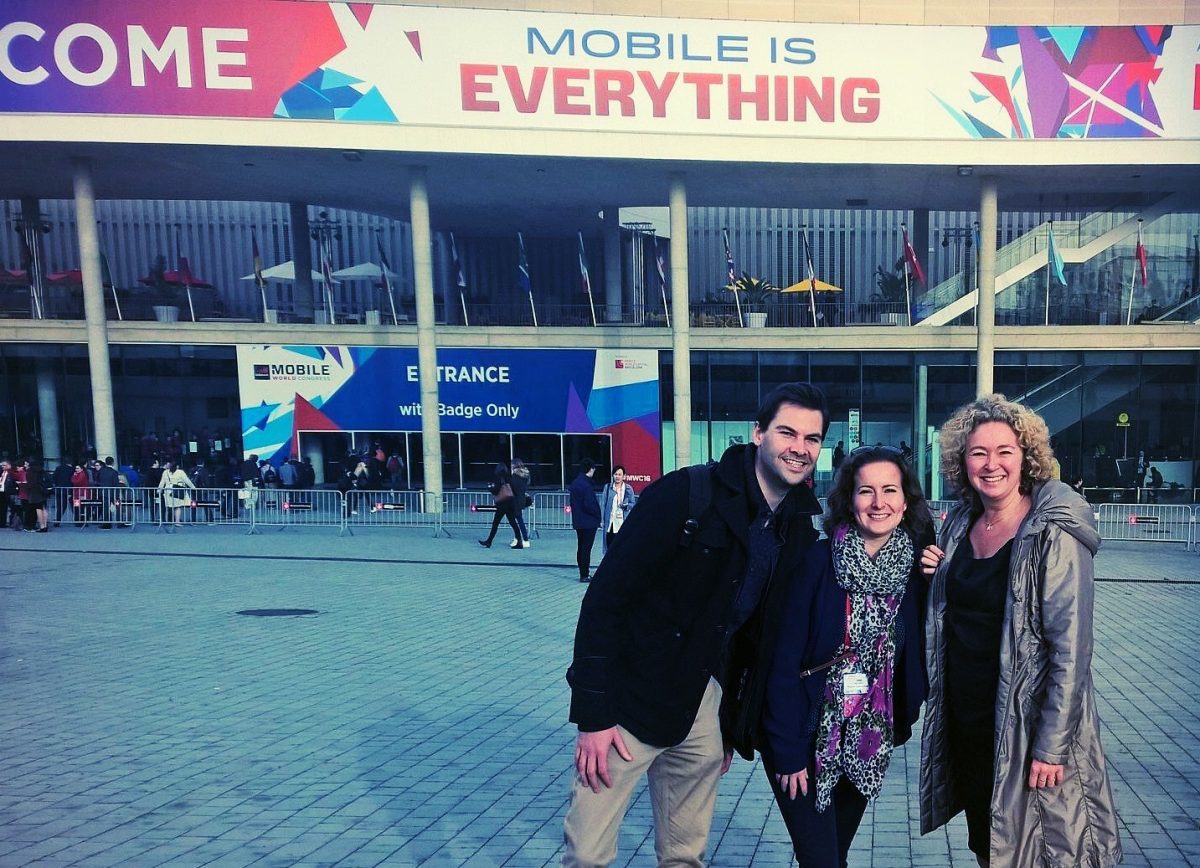
As a PR agency working in ICT, IT and consumer electronics, we travel from Amsterdam to Barcelona each year for Mobile World Congress. The event attracts more than 100,000 visitors and offers technological inspiration, networking and very pleasant weather.
This year, the Progress Communications team organised and supported interviews, press demonstrations and media meetings for clients Microsoft, AVM and Criteo. Smartphones still make headlines at MWC, but the event covers much more. Here are five trends we spotted.

Source: Facebook
1. Virtual reality is breaking through — this time for real
Virtual reality was everywhere at MWC 2016. Judging by the innovations and enthusiastic reactions, 2016 could be the year VR becomes mainstream. But had that not been predicted before? The difference is that the technology is becoming more affordable and widely available.
Samsung, Sony, LG, Alcatel, Nokia and Oculus presented products ranging from smartphones used in VR headsets to standalone headsets and compact 360-degree cameras. Microsoft’s HoloLens, which combines the real world with holographic digital content, appeared in Europe for the first time. Still under development, it could only be viewed behind glass. Facebook CEO Mark Zuckerberg also spoke enthusiastically about VR’s possibilities for consumers during his keynote.

Source: Intel
2. IoT could help save the bees
Hardware manufacturers and software developers have invested in the Internet of Things for years. More everyday objects can connect to the internet and exchange data, including thermostats, lights, smartwatches, washing machines and cars. The idea of a refrigerator that notices the milk is running low and adds it to an online shopping list is familiar too.
A newer development is using IoT in corporate social responsibility projects. At MWC, Intel and Dell presented a project collecting data about the alarming decline in bee populations. Bees are fitted with tiny chips and sensors, and the resulting data is made freely available to scientists, helping them investigate ways to protect the insects.

Source: Microsoft
3. Your smartphone as a PC
As flexible working becomes established, companies such as Microsoft are responding with new tools. Continuum turns a Lumia 950 smartphone into a desktop-like experience. Connect the docking station to a monitor, mouse and keyboard, and you can work wherever a suitable screen is available while continuing to make calls, send messages and use Twitter.
Wireless projection, including presentations, is also possible. The technology fits in a coat pocket, while Windows 10 scales Office and universal apps to a larger screen. HP announced the Elite x3, another Windows 10 smartphone that supports Continuum.

Source: Progress Communications
4. 5G is set to spread worldwide
Nobody enjoys a slow network connection. The proposed successor to 4G, 5G, aims to change that. The vision includes wireless networks connecting enormous numbers of devices and download speeds of up to 10 gigabits per second.
This is driven by need as well as possibility. Gartner predicts that almost 21 billion devices will be connected to the internet by 2020, putting pressure on existing networks. At MWC 2016, expectations were that 5G would become available internationally between 2018 and 2020. We cannot wait.

Source: Huawei
5. Tablets that can replace laptops are becoming mainstream
Microsoft popularised the tablet-laptop hybrid with Surface in 2012: a tablet that could replace a laptop. The company is now presenting its fourth generation, while HP, Samsung and Apple offer products with similar form factors. At MWC, Huawei and Lenovo both unveiled Windows 10 tablets designed to replace laptops. We expect to see much more of this trend.
Looking ahead to MWC 2017
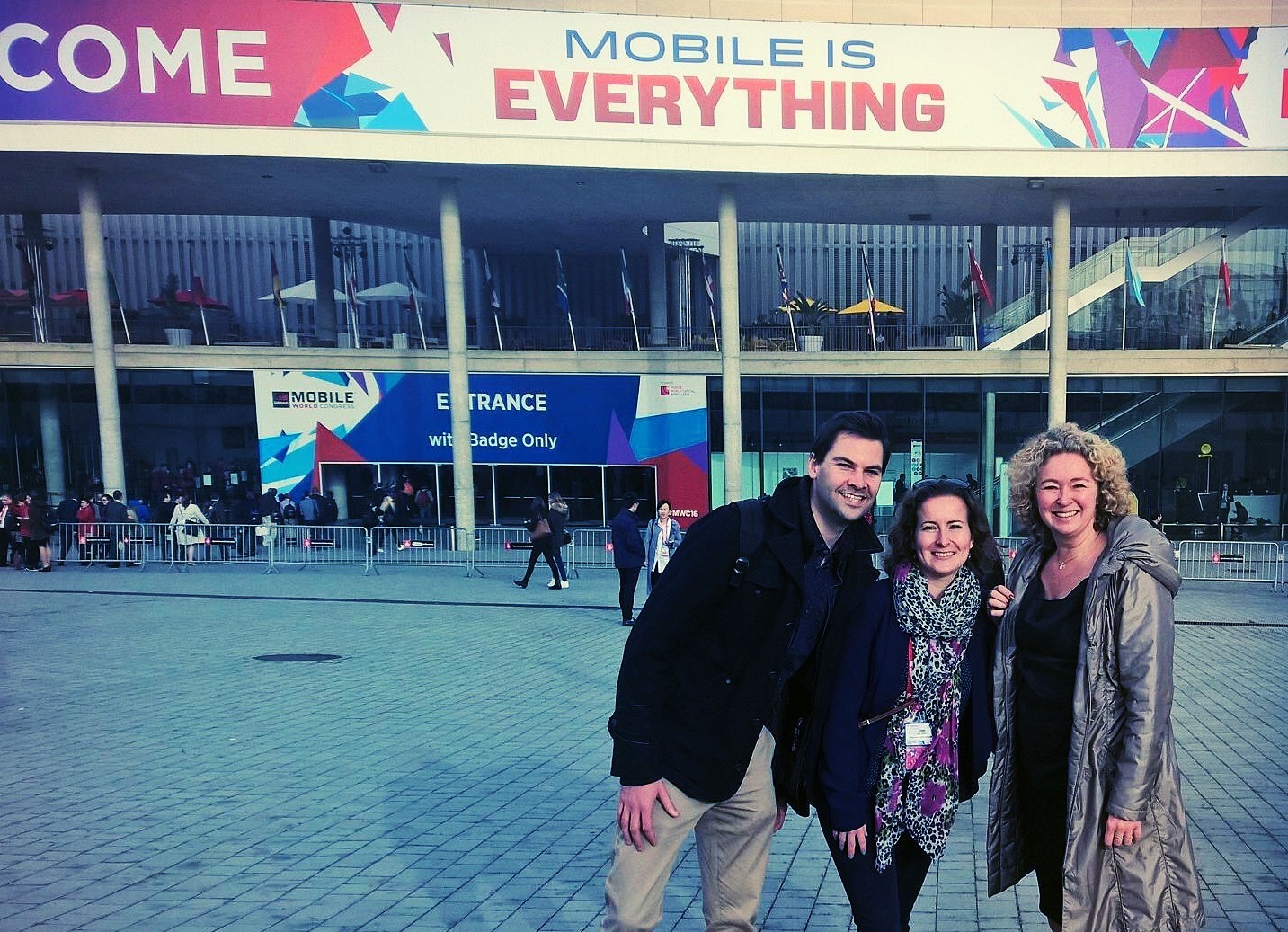
Three members of Progress Communications attended this year: from left to right in the photograph, Robbert, Linda and Stella. Curious about how we could connect your business with Benelux journalists at next year’s MWC? We will be there again in 2017 and would be happy to help.
Robbert
More news ›