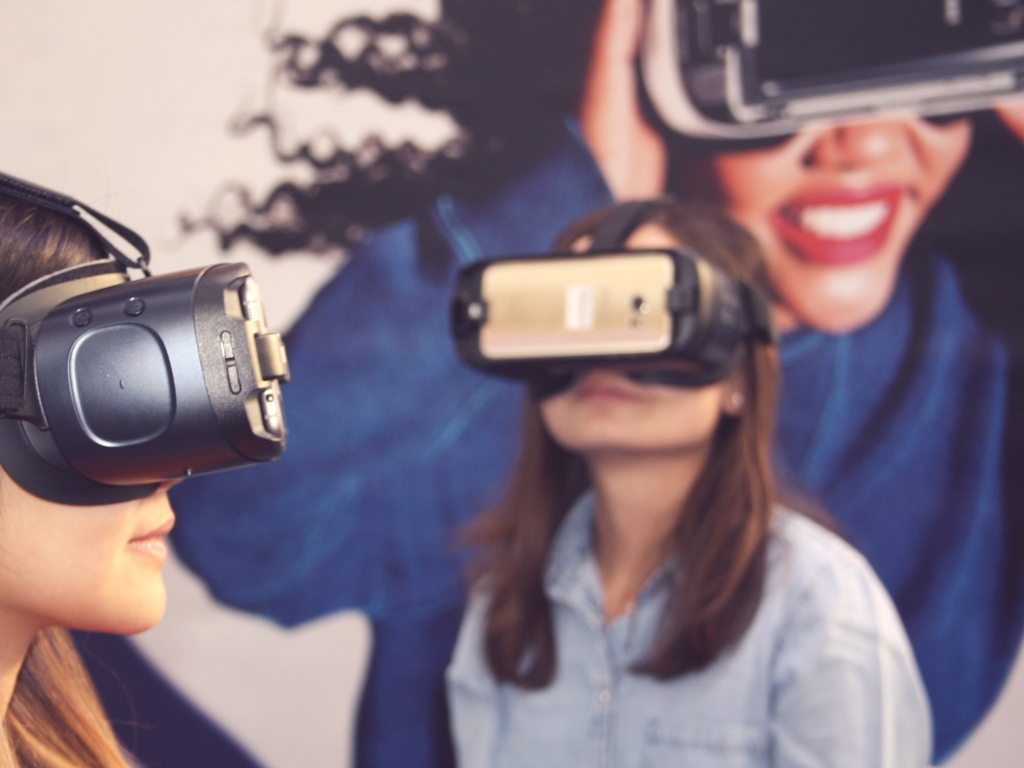
I have now been working as a student employee at Progress Communications in Amsterdam for several months. Alongside that, I am writing my dissertation on virtual reality and charities. Exploring this new medium for my research has also made me wonder what the near future of PR might look like as virtual reality, or VR, continues to develop.
Storytelling in 360°
VR is bringing a new dimension to storytelling. For marketing and communications professionals, storytelling and content marketing are central to the job. Virtual reality allows stakeholders to experience a brand’s world. This supports the ultimate aim of public relations: building and strengthening the relationship between a client and its stakeholders.
The ability to watch 360-degree films contributes greatly to that brand experience. A VR headset blocks out the outside world, while the film allows you to look all around you. It feels as though you have stepped into a virtual world.
A personal medium
Virtual reality is intensely personal. Once the headset goes on, the noise of other communication falls away and the stakeholder can focus entirely on the VR environment. That alone presents an opportunity for brands, as the volume of communication aimed at audiences makes it increasingly difficult to stand out.
VR is also an excellent way to convey a feeling. When brands use it to evoke a particular emotion, they want their audience to associate that feeling with the brand. Over time, audiences may also begin to personify the brand, seeing it in human terms. This can create a stronger emotional relationship between brands and stakeholders.
The non-profit sector offers examples of organisations appealing to their audiences’ emotions. UNICEF, for example, already uses virtual reality in fundraising. Since introducing it, the time fundraisers need to persuade donors has reportedly halved.
PETA ran a VR campaign showing a chicken’s life, from chick to slaughterhouse. PETA found that viewers responded more positively to the VR film than to a leaflet or a conventional two-dimensional video. Thirty per cent of viewers also felt more negatively about eating chicken after watching it.
As my colleague Inger mentioned in last week’s blog, journalists and newsrooms are also seeing a shift: written content is increasingly giving way to video. Video content has become more important in generating online traffic for publishers. Some media outlets are going a step further and experimenting with news in virtual reality. The New York Times, for example, launched an application that lets viewers experience reporting on subjects such as the war in Sudan by placing a smartphone inside a VR headset.
At Progress, we embrace technology and closely follow the possibilities and opportunities of virtual reality. Curious about how your organisation could use VR in its PR strategy? Contact our Amsterdam or Antwerp office. We would be happy to explore the possibilities with you.
Charise
More news ›