Clients often ask whether a story can become a trending topic and travel around the world. PR professionals would love to achieve that too, but the outcome depends on many factors. Occasionally, a project brings together a particularly strong story and the means to share it widely.
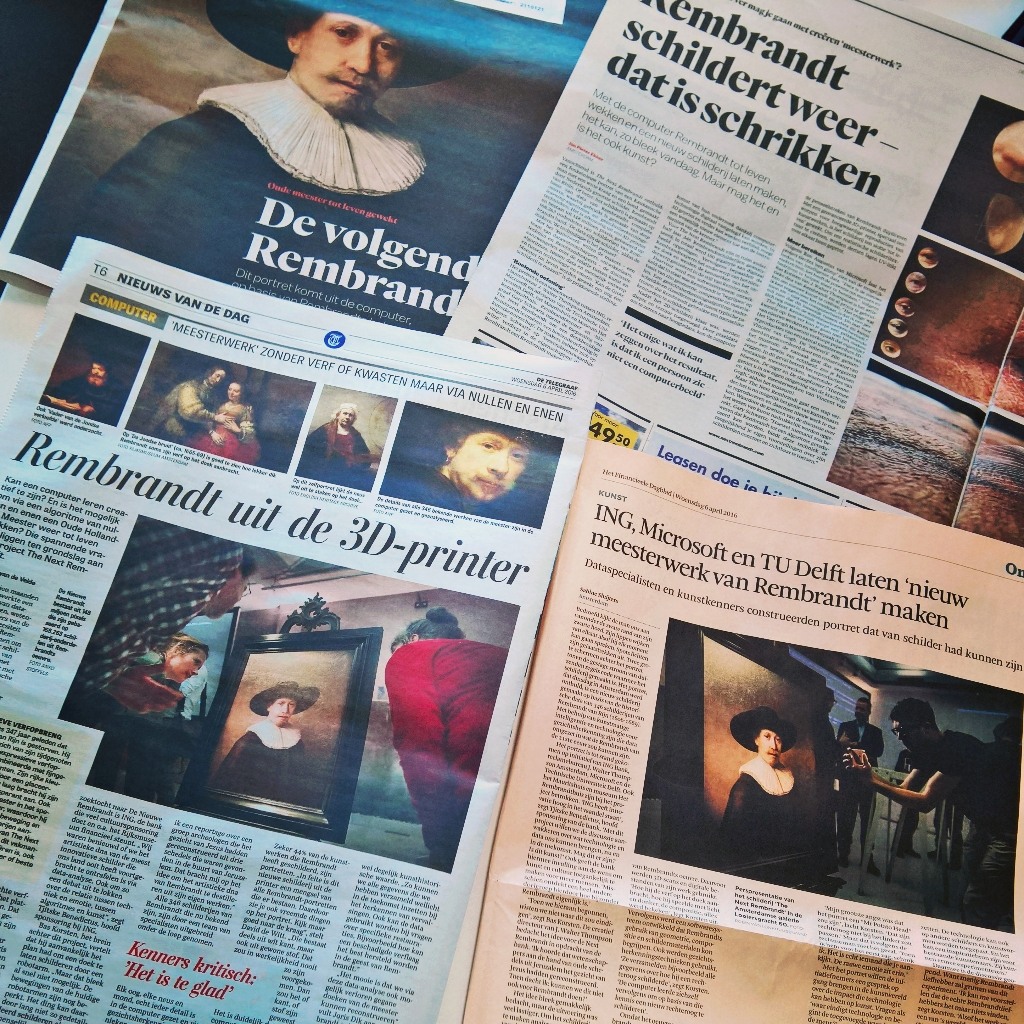
In April 2016, The Next Rembrandt provided such an opportunity. The project brought together partners including ING, J. Walter Thompson and our client Microsoft. It reached programmes such as RTL Late Night, secured substantial newspaper coverage and attracted international attention from titles including the BBC, The Verge and El País.
Here is a look back at the strategy, content, distribution and results.
Art created with the help of data
The project explored whether data and technology could create a new portrait in the style of Rembrandt. The team analysed 168,263 fragments from his paintings and applied techniques including deep learning and facial recognition. The resulting portrait contained 148 million pixels.
Data scientists, developers and Rembrandt specialists worked on the project for more than eighteen months before the 3D-printed painting was unveiled on 5 April 2016.
The purpose was to start a conversation about the influence of science and data on art, and the relationship between technology and emotion. That broader question gave the project relevance beyond the technical achievement itself.
Give the media useful content
The J. Walter Thompson team developed a strong collection of content around the project. An interactive website used visuals and video to explain the work. A dedicated press site brought together the release, photographs, videos and quotes from partners and Rembrandt experts.
That preparation made the story easier to cover. Quotes appeared in articles around the world, and video material was reused in television reports. Our monitoring at the time found that the supplied photograph appeared in more than a fifth of the articles, blogs and tweets included in the analysis.
A clear content strategy helped the project communicate consistently. Journalists still chose their own approach, but accurate explanations and usable materials gave them a strong starting point.
Coordinate the distribution
Good content needs an appropriate audience. Together, the partners divided responsibility for media outreach so that the campaign could benefit from each organisation’s network without duplicating effort.
ING contributed contacts in national and arts media. J. Walter Thompson brought marketing and international media relationships. Microsoft’s network added news and technology contacts. The partners’ own channels also helped give the story its initial online momentum.
This coordination was a central part of the media relations approach. It connected a shared story with different groups of journalists.
Concentrate attention around the unveiling
The team considered several launch options: an exclusive with selected titles, advance buzz or one coordinated announcement. We chose to concentrate the publicity around the unveiling.
Some journalists received information or saw the painting beforehand, with an embargo until the reveal. The participating media respected that timing, allowing the story to emerge around a shared moment.
Our article on when to use a press embargo explores the practical considerations behind that approach.
Follow how the story travels
According to the Coosto analysis used for the original article, almost 5,000 online messages about The Next Rembrandt appeared within five days, including more than 4,800 on Twitter. Many linked to external coverage, with Fox News, The Independent, Inc.com, Engadget and NU.nl among the prominent destinations.
The analysis estimated potential reach at more than 50 million impressions. That was a potential exposure figure, rather than a count of people confirmed to have read the story.
Coverage also appeared in the NOS Jeugdjournaal, Van Liempt Live, The Wall Street Journal, The Guardian and Argentina’s La Nación. The project had succeeded in starting a discussion across different countries and types of media.
A shared effort
For the PR approach, we worked with Jessica Hartley on behalf of J. Walter Thompson, Marc Smulders from ING and Yvette Lansbergen from Microsoft. We thank them for the collaboration.
The case shows how a technology PR story can reach beyond a specialist audience when the subject, materials, partnerships and timing work together.
This article was created by Trevor Leslie, Lianne van Dijk and Linda van Aalten of Progress Communications.
More news ›